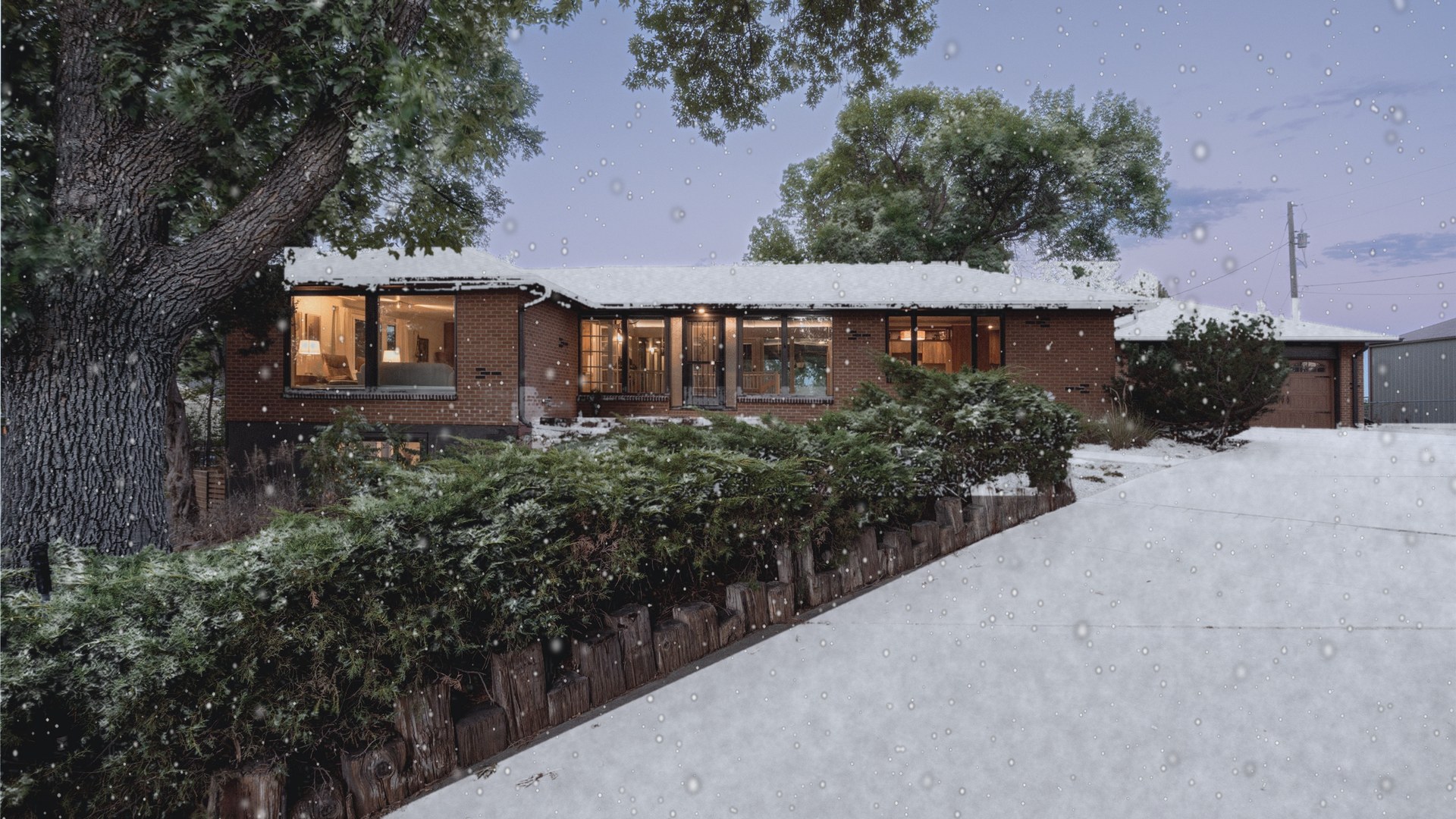
If you've lived in Colorado for more than one fall, you know the drill. Tuesday is 75 degrees and you're eating lunch on a patio. Thursday you're scraping your windshield with a library card because the ice scraper is buried somewhere in the garage. Sometimes we get both in the same week. Sometimes the same day.
The good news: your house doesn't need a full weekend project before winter. It needs about five minutes of attention in a few key spots. Here's my quick checklist. Save it, print it, or forward it to the friend who still has a hose attached to the spigot in January (we all know one).
1. Disconnect garden hoses and winterize exterior faucets
A hose left attached traps water in the faucet. When that water freezes, it can crack the pipe inside your wall, and you won't find out until spring when you turn it on and water starts showing up somewhere it shouldn't.
- Unscrew every hose, drain it, and store it in the garage or shed.
- If your home has an indoor shutoff valve for the outdoor faucets, close it, then open the outside faucet to let the line drain.
- Add an inexpensive insulated faucet cover for extra protection. They cost a few dollars at any hardware store.
- Have a sprinkler system? Make sure it's been blown out before the hard freezes settle in.
2. Check your furnace filter and schedule service if needed
Your furnace is about to go from part-time to full-time. A clogged filter makes it work harder, run less efficiently, and wear out faster.
- Pull the filter and hold it up to the light. If you can't see light through it, replace it.
- During heating season, plan to check it monthly and replace it every one to three months, depending on the filter type, pets, and dust.
- If the furnace hasn't been serviced in the last year, or it's making new noises, schedule a tune-up now, before the first cold snap when every HVAC company in town is booked.
- While you're at it, test your carbon monoxide and smoke detectors.
Need someone to take a look? Here's a local company I'd point you to:
Efficient Comfort Heating and Cooling
Phone: (720) 464-7507
Website: coefficientcomfort.com
3. Clean gutters and confirm downspouts drain away from the foundation
Gutters full of leaves can't move snowmelt, which means water backs up, freezes, and forms ice dams along the roof edge. And downspouts that dump right next to the house send that water straight toward your foundation, which is the last place you want it.
- Clear out leaves and debris once most of the trees have dropped.
- Run a hose through the gutters (before you put the hose away) to make sure water flows freely.
- Check that every downspout empties several feet away from the house. A simple downspout extension or splash block fixes most problems.
- Look for gutters that are sagging or pulling away from the fascia while you're up there.
4. Check weatherstripping around exterior doors
Weatherstripping wears out quietly. You usually don't notice until you feel a draft on your ankles in December.
- Close the door on a sheet of paper or a dollar bill. If it slides out easily, the seal is worn.
- On a sunny day, look for light around the edges of a closed door.
- Replace cracked, flattened, or missing weatherstripping and check the door sweep along the bottom. It's an inexpensive fix that makes a real difference in comfort and heating bills.
5. Locate your main water shutoff before an emergency
This is the one most people skip, and it's the one you'll be most grateful for. If a pipe bursts, every minute you spend searching for the shutoff is more water on the floor.
- In many Denver-area homes, the main shutoff is in the basement or crawl space near where the water line enters the house, often on the front-facing wall. In some homes it's near the water heater or in a utility closet.
- Once you find it, make sure it actually turns. Valves that haven't moved in years can stick.
- Tag it with a bright label and show everyone in the house where it is.
- Snap a photo of it on your phone so you can walk a house sitter or family member to it in a pinch.
Your Quick-Save Checklist
- Hoses off, drained, and stored
- Exterior faucets winterized and covered
- Furnace filter checked or replaced
- Furnace service scheduled (if it's been a year)
- CO and smoke detectors tested
- Gutters cleared
- Downspouts draining away from the foundation
- Door weatherstripping checked
- Main water shutoff located, tested, and labeled
One More Thing
Winter is a great time to get to know your home a little better, whether you're settling in for the season or quietly thinking about a move in the spring. If you have questions about your home, your neighborhood, or what the market looks like heading into the new year, I'm always happy to talk.
Stay warm out there, and enjoy the 75-degree days while they last.
Barry Kunselman
Hatch Realty | Denver Metro
303.887.0588 | barry@hatchdenver.com
buydenverurbanhomes.com